
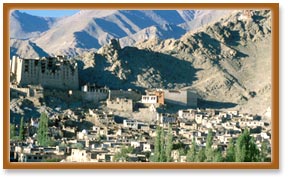
 Situated at an altitude of 3505 m above sea level, Leh is to the east of Jammu & Kashmir and is the capital of Ladakh. Zanskar River flows through it and breathtaking sparking white snowcapped peaks surround the valley of Leh. A blending of barren desert and well-irrigated farms, the ruined Tibetan style palace of Leh is the first to attract the attention of the tourists. Reaching Leh in the olden days was certainly not so easy as merchants heaved a sigh of relief of successfully getting across the high mountain peaks Yarkhand and Tibet along with their caravans and looked forward to the comforts awaiting for them in one of the Central Asia's most beautiful and panoramic city with a pleasant climate. The deeply entrenched Tibeto-Buddhist Culture of the region and its colorful gompas are a spotlight in Leh for devout Buddhists while adventure tourists love the place as it sports some of the best hikes in India.
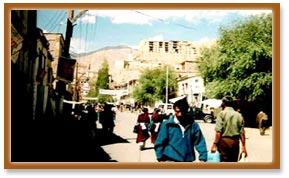 It was the 17th century ruler, Sengge Namgyal, who shifted his Capital Shey to Leh because of its strategic location on the ancient Silk Route. Soon, the trade and commerce of the city flourished and its prosperity grew by leaps and bounds until 1950s when the Chinese borders were closed forever, placing a big check on its business. Sunni Muslim merchants were the backbone of Leh's market in those days. Now, with the changed priorities, Leh has again emerged as strategic location in two wars between India and Pakistan and one can see soldiers of Indian Army and their families in large numbers, especially in winters. Ladakh was only opened to foreign tourists in 1974. Since then, Leh has expanded to almost double the original size. The highlights of the place are Leh Palace, Namgyal Tsemo Gompa and the Sankar monastery with its modern Tantric murals and a thousand-headed Avalokitesvara deity. While in Leh, don't miss the visit to its nearby picture-perfect villages and Gompas including Shey monstery, and the Tikse Gompa.